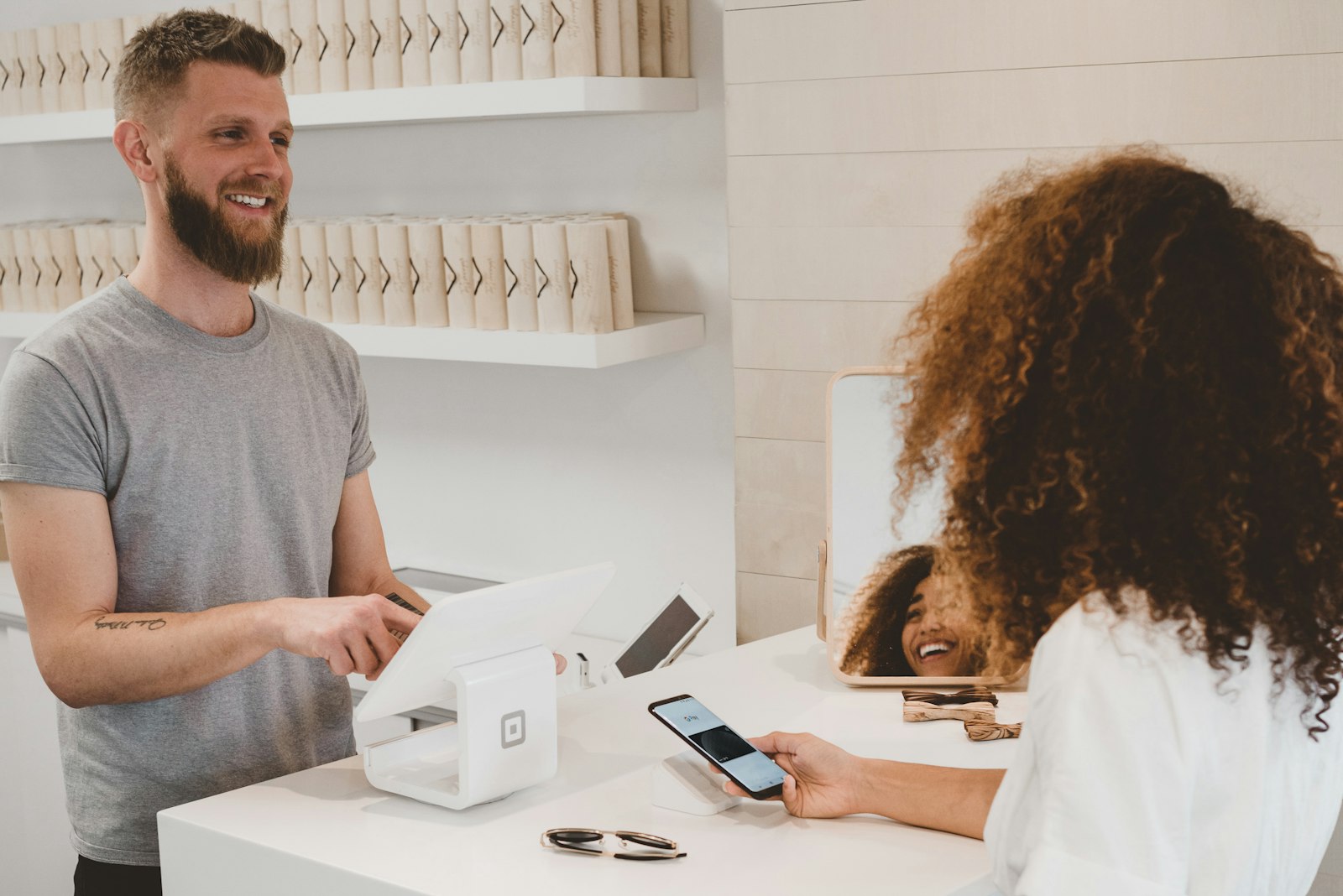
Typical scenario (anonymised): a boutique with a great Instagram profile and lots of followers, but sales all go through direct messages. Every order is a manual chat: availability, sizes, payment, shipping. It doesn't scale and requests get lost.
At first it works great: it's personal, it's fast, customers feel looked after. The problem arrives with volume. When messages hit twenty a day, handling them by hand means replying in the evening, forgetting a size, keeping waiting someone who wanted to buy right away. And whoever waits often changes their mind.
Meanwhile the market races ahead: according to the B2C eCommerce Observatory (Netcomm – Politecnico di Milano), in 2024 Italians' online purchases topped €58.8 billion, up 6% on 2023, with online accounting for 13% of total consumption. It's not a niche: it's where customers are already buying.
Where e-commerce is growing in Italy
Growth isn't uniform: some segments pull harder than others. Here are the 2024 changes across the main sectors, useful for understanding where a physical shop has the most to gain from going online:
Change vs 2023
Fonte: B2C eCommerce Observatory: Netcomm / Politecnico di Milano
What selling only in the DMs really costs you
"I already sell on Instagram" seems free, but it has hidden costs you don't see until you add them up:
- Your time: every order is a conversation to follow by hand, after hours, with the risk of losing some in the pile.
- Lost sales: someone who wants to buy at 11pm and can't find how to pay often doesn't write again the next day.
- No data: you don't know how much you sell, what sells most, who your returning customers are. You decide by feel.
- Algorithm dependence: if Instagram changes or blocks your profile, you lose shop and customers together, in one go.
The key point
On Instagram you're a tenant: the house is Meta's, the rules are Meta's, and your customers' contacts stay inside a social network you don't have full access to. An e-commerce is your home: the data, the emails, the buying habits stay yours.
What we put in place
- E-commerce with catalogue, sizes and availability always up to date.
- Integrated online payments (no more chasing bank transfers).
- Connection to the Instagram profile (shopping + link in bio leading to the site).
- Full tracking to understand where orders come from and how much they return.
The important thing: Instagram isn't thrown away. It stays the place to get discovered and showcase products: what changes is where the purchase happens. The social brings people in, the site lets them buy on their own and keeps the data. The two work together, each doing what it does best.
What you really need to start (and what you don't)
The typical fear is "I'll have to manage a complicated site". It's almost never true. To start well you need little, and above all you need it in the right order:
- A well-kept catalogue with good photos and clear descriptions: it's 90% of the result.
- Simple payments and shipping, with two or three options, not twenty.
- A panel where you update products and availability in a few minutes, from your phone.
- No useless features at launch: you start lean and add only what the data says you need.
The value isn't just selling more: it's no longer handling every order by hand and finally having your customers' data in your house, not just inside a social network.
The lesson
Instagram is great for getting discovered, but it's not a till and it's not yours: the algorithm decides who sees your posts. When volume grows, you need a place of your own where the user buys on their own, and where the data stays yours.
If you recognise yourself in this scenario (sales all going through messages and the feeling of chasing orders), on a free call I'll tell you whether an e-commerce makes sense for you, with what timing and what cost. Without selling you features you don't need.
Want to apply it to your business?
Book a free call: we'll work out together what makes sense to do, no commitment.